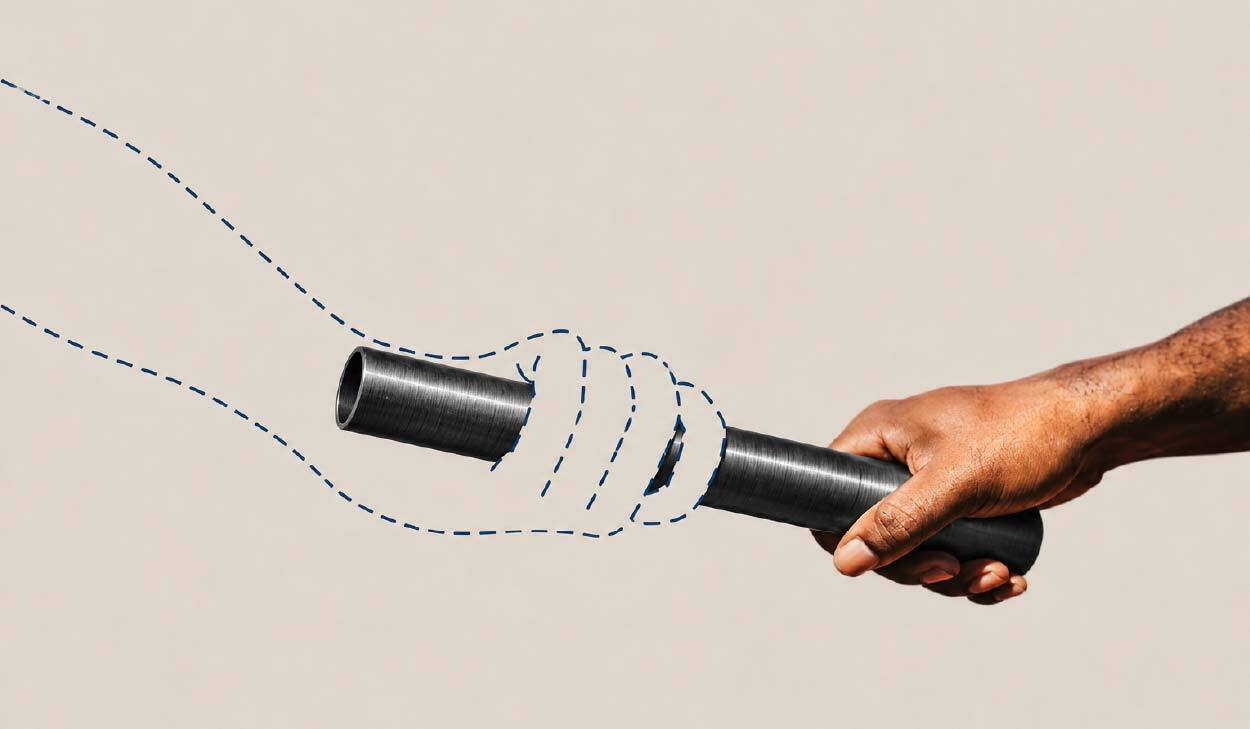
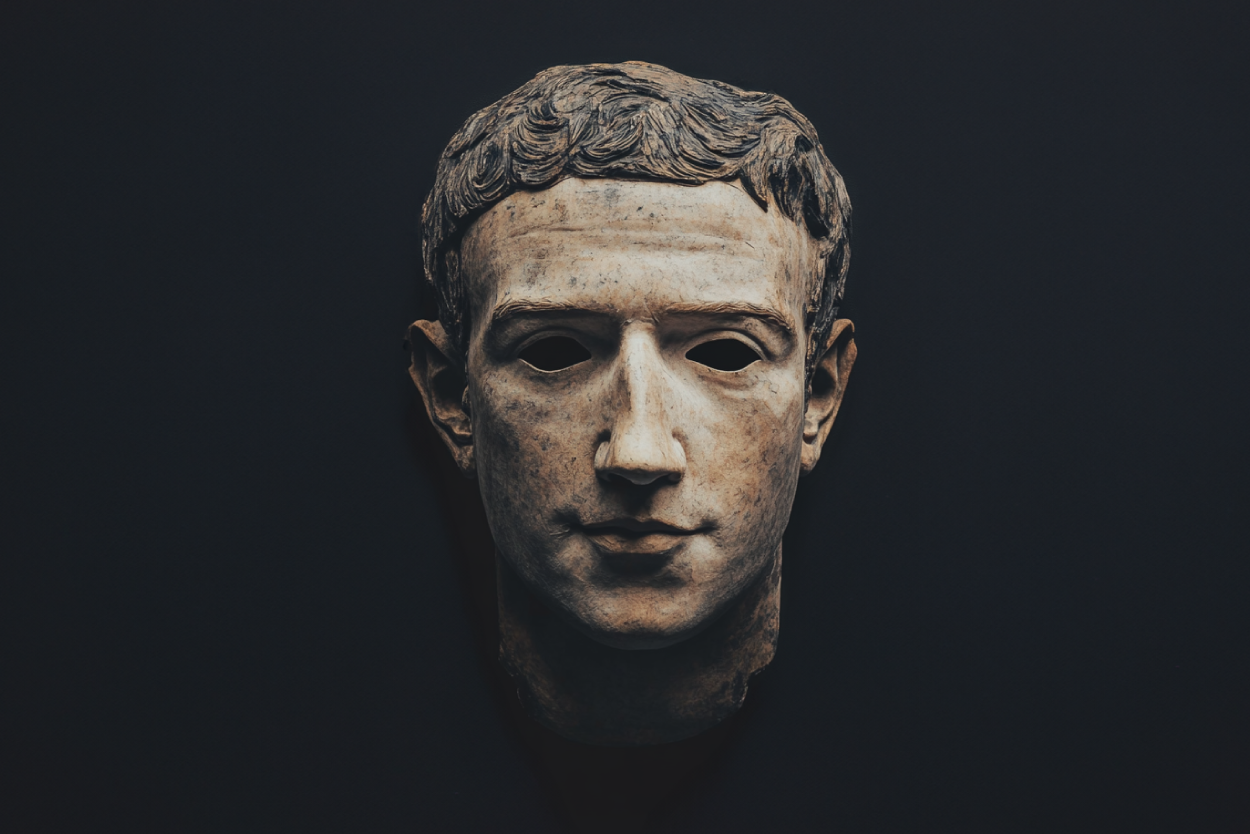
The superstar, the idol, the ace. Conversely, the villain, the megalomaniac, the Big Bad. Many consider history to be largely defined by capital "G" Great Men and Women, and posterity lauds or demonizes them in outsized fashion accordingly. They can be world leaders, military commanders, titans of industry, creative visionaries, etc. Whatever their accomplishments or objectives, they share a few things in common: grandiose ambitions and scope, a seemingly uncanny ability to make the right moves at the right time to achieve their goals, and the utter dependability of their empire on their personal leadership, relationships, talent, and charisma (or at least a seeming belief by the wider public in this final point).
When a company is dependent on the skills of such a person, that's a lot of proverbial eggs in a single basket. In our business, we refer to this as key-man risk: the possibility that the loss, incapacity, or distraction of a single person materially impairs the value of a company or investment strategy. This is not necessarily a non-starter. There are many reasons to underwrite around key-man risk: The fact is that many firms become successful because the drive and vision of a single person or small group of individuals were able to identify a niche that was hitherto unthought of, or who could see a gap or inefficiency the broader market couldn't; a founder with a large share of their own wealth in the business is often more closely aligned with outside capital than a hired executive; concentrated decision-making can move faster than a committee; emerging managers, frequently built around a single portfolio manager, are often where capacity is still available and where returns have not yet been competed away; and in private markets, part of the risk can be addressed by contract—key-person provisions in limited partnership agreements typically allow investors to suspend new investments or vote to wind down a fund if named individuals leave.
But once you become comfortable with the inherent fragility of such an arrangement, the diligence cannot rest. This is something we'd consider the "hit-by-the-bus" factor; something to additionally consider and assess continually is bench strength and thoughtful, deliberate succession planning before a crisis has the chance to unfold.
Apple remains the most widely known example of this done well. When Steve Jobs, all but secularly canonized in his lifetime as a legend, resigned in August 2011, weeks before his death, the board named Tim Cook, who as chief operating officer had been responsible for all of the company's worldwide sales and operations. The choice had been 13 years in the making. Jobs recruited Cook from Compaq in 1998 and widened his remit steadily: executive vice president of worldwide sales and operations in 2002, head of the Macintosh division in 2004, and chief operating officer in 2005, a promotion Jobs said was "high time we officially recognized" after more than two years of Cook doing the job. Cook also ran the company three times before he was given it: for about a month in 2004 while Jobs recovered from cancer surgery; for nearly six months during Jobs’s 2009 medical leave; and again from January 2011, when Jobs told employees, "I have asked Tim Cook to be responsible for all of Apple's day to day operations." By the time he resigned, his letter to the board could simply ask Apple to "execute our succession plan and name Tim Cook as CEO." The plan existed, the successor had already run the company, and Jobs stayed on as chairperson to ease the transition.
Apple also worked to preserve the founder’s thinking beyond the founder’s physical presence. In 2008 it hired Joel Podolny, the former dean of the Yale School of Management, to build Apple University, an internal program designed, according to the Los Angeles Times, to help executives internalize the thoughts of its visionary founder. Jobs was equally deliberate about what should not be preserved. He knew Disney from the inside: the 2006 sale of Pixar made him Disney’s largest single shareholder and a member of its board. He had also absorbed a cautionary tale from the company’s history. Cook later recounted that after Walt Disney’s death, “everyone spent all their time thinking and talking about what Walt would do.” So when Jobs offered Cook the job, he told him, “Never ask what I would do, just do the right thing.” Cook kept the principles Jobs had taught him while leading as an operator in his own right, and over his tenure Apple’s market capitalization rose from roughly $350 billion to $4 trillion, by the company’s own count.
The second handoff followed the same pattern. John Ternus joined Apple in 2001, became vice president of hardware engineering in 2013, and joined the executive team in 2021. In the years before the announcement, Apple steadily raised his profile: he became a regular keynote presenter and, according to Bloomberg reporting cited by Fortune, a key decision-maker on product road maps. In April, the board announced that he would succeed Cook on September 1, describing the decision as the product of a "thoughtful, long-term succession planning process." Cook remained CEO through the summer to manage the handover and then became executive chairperson. That makes two planned handoffs in 15 years, each to a long-tenured insider who had been tested in public before receiving the role, and each with the outgoing leader still available to the company.
As a company or firm matures, are they ensuring the institutional knowledge and edge inculcated by the founder is being developed and cultivated among peers or in a newer generation able to eventually take the reins while keeping the ride smooth and heading in the correct direction? That is ultimately the key question that should put any good analyst on their toes, letting them know when a business's good footing today may merely be covering a potential tripwire waiting to be stumbled across. Three current cases show how differently that trap can be laid.
Tesla's most recent annual report states that the company is "highly dependent on the services of Elon Musk" and, in the same passage, that "he does not devote his full time and attention to Tesla," citing his roles at SpaceX, xAI, and elsewhere. Consider how that disclosure would read in a manager diligence file. The ILPA Principles, the institutional standard for private fund terms, hold that key persons should devote "substantially all their business time to the fund," and that anything compromising that commitment should be disclosed promptly to investors. Picture a fund manager with the same profile. He divides his time among several other businesses. His firm did more than $573 million of business in a single year with companies he controls, which its audit committee deemed arm’s length. It also put $2 billion into one of his affiliated ventures, even though a nonbinding investor vote on the idea had failed. Any operational due diligence process would put hard questions to that manager.
Yet most institutional portfolios own Tesla regardless, because an index allocation applies no diligence screen. The same is now true of SpaceX, which gives Musk roughly 82% of the voting power and allows only holders of his share class to remove him. Weeks after its June IPO, it qualified for the Nasdaq-100 under a new fast-track rule that lets certain large IPOs enter the index after only 15 trading days, placing it in funds that track more than $800 billion. CalPERS and the New York City and State comptrollers had called its governance the "most management-favorable governance structure ever brought to the US markets at this scale."
Where institutions did have a voice, the issue was named explicitly. Ahead of the November 2025 vote on Musk's pay package, Norway's sovereign wealth fund said it would vote against, citing "the total size of the award, dilution, and lack of mitigation of key person risk." Musk had framed the vote around control: "I just don't feel comfortable building a robot army here and then being ousted." More than three-quarters of votes cast approved a package worth up to $1 trillion that could lift his stake to nearly 30%.
Shareholders were, in effect, asked to mitigate key-man risk by deepening it. Retention purchased with control lowers the odds the key man walks away, but it raises the cost of every other failure, because the tools outside owners would use to respond, such as board independence and the ability to replace management, weaken as control concentrates.
Shareholders were, in effect, asked to mitigate key-man risk by deepening it.
For an allocator, the implications are practical. Key-person exposure should be measured on a look-through basis across active and passive sleeves, since the same individual may now sit behind several index constituents. Proxy voting policies, which managers exercise on clients' behalf, are one of the few levers investors hold over founder-controlled companies; they should address key-person and governance concentration directly. And active managers who own these names should be able to explain how they have underwritten the individual, separately from the business.
Huang co-founded Nvidia in 1993 and led it for more than three decades. In January, Bloomberg reported that the company lacked a clear successor.
On October 29, The New York Times reported a close relationship between Huang and Alice Huang (no relation), an executive at Megaspeed, a Singapore-based AI infrastructure firm that had reportedly bought $4.8 billion of Nvidia chips and was under US and Singaporean investigation over suspected diversion of chips to China. US, Singaporean, and Taiwanese officials reportedly had reason to believe she might be a Chinese intelligence asset; China's Foreign Ministry called the claim "completely groundless." On November 8, Huang told employees, "I was unfaithful to my wife," and the board opened an independent investigation while stating that it "has confidence in Jensen and his leadership team." The stock fell 4.3% the next day in a rising market. On November 11, the Times reported a second relationship, with an executive who reported to Huang. The board accepted his resignation that day and named CFO Colette Kress interim CEO.
Three points stand out. The board's public expression of confidence lasted three days, a reminder that statements of support in a key-man crisis carry little information. The vulnerability also ran through one of the very assets that made Huang indispensable: his personal relationships. He was Nvidia's channel to Washington on China, credited by the president with negotiating the terms under which the US government would take 15% of certain China chip revenue. Relationship capital is the hardest form of founder value to transfer, and here it became the alleged point of attack. (The allegations remain unproven, and the board has said it has no reason to believe secrets were compromised.) Finally, Kress's appointment is explicitly interim; Nvidia still has no named successor.
The personal ledger may not close with the resignation. Huang owns roughly 3.5% of Nvidia and has been married for more than 40 years; nothing has been reported about the status of the marriage. The relevant precedent is Amazon. In January 2019, Jeff and MacKenzie Bezos announced their divorce with no prenuptial agreement; within hours the National Enquirer published messages revealing an affair, and Bezos later accused its parent company of attempted extortion, which it denied. MacKenzie Scott kept roughly 4% of Amazon, then worth about $37 billion. In California, where Nvidia is headquartered, community property is split “fairly equally.”
For a company of Nvidia's size and liquidity, the more immediate exposure is disclosure. Divorce proceedings, particularly contested ones, can generate testimony and records that bear on the board's investigation, the congressional inquiries, and the shareholder lawsuit already filed, extending the period of headline risk.
The economic consequences are far more acute in businesses that are concentrated, illiquid, and founder-controlled, a description that fits many investment management firms. When a founder owns a large share of the management company and of the fund's carried interest, a settlement can force a sale of that ownership, divide control between parties with different interests, or introduce a new owner with no role in the business. Any of these outcomes can weaken the alignment between the people managing the capital and the investors who entrusted it to them. How founder ownership would change hands, and what governs that transfer, is a fair question in manager diligence, alongside the more familiar key-person and succession questions. A founder's marriage can become a governance event, a liquidity event, and a disclosure event at once.
Aschenbrenner named his fund, Situational Awareness LP, after his 2024 essay forecasting the arrival of artificial general intelligence. The essay was, in effect, the prospectus, and the fund’s thesis and its founder were one and the same. Backed by Stripe co-founders Patrick and John Collison, Daniel Gross, and Nat Friedman, it managed more than $1.5 billion in 2025. After a reported 439% return through June 2026, assets reached roughly $20 billion, concentrated in memory-chip and data-center names and reportedly levered three to four times. In July, as the semiconductor sector had its worst month since 2002, the fund fell 67% and sold most of its public portfolio to Citadel at more than 10% below market value, cutting its assets to roughly $10 billion.
Its investors reportedly included family offices, institutions, and endowments, and the characteristics that standard diligence would flag were visible well before July. Assets grew more than tenfold in a short period, a pace that tests whether capacity is being managed at all. Leverage on a single thesis meant a sector drawdown could force a sale, while the discount accepted from Citadel fell on every investor, including those who stayed. The fund was still reported up 80% for the year, a figure that describes investors who were in from January; capital that arrived later absorbed the full July loss on a much larger base. What remains is weighted toward private holdings, including an Anthropic stake reportedly worth about $5 billion, leaving remaining investors with a less liquid, more concentrated portfolio than the one they bought.
The deeper lesson concerns what investors can and cannot contract for. Key-person provisions, as the ILPA Principles frame them, address one form of key-man risk: the founder’s departure or a diminished time commitment. They leave the other form untouched, which is the concentration of judgment in one person. In a fund built on a single individual’s thesis, that judgment is the strategy, so key-man risk and investment risk become the same risk, and an investor cannot reduce one without the other. Protection therefore has to come from structure. That means hard limits on leverage and position size written into the fund’s governing documents, a risk function with the authority to enforce those limits independently of the founder, liquidity terms that match the liquidity of the portfolio, and a demonstrated willingness to close to new capital. Each of these can be observed, and to a degree negotiated, before an allocation is made. Situational Awareness lost two-thirds of its value in a month with its founder fully engaged. An allocator should have been able to answer one question in advance: short of the founder changing his mind, what would have stopped the leverage from being added?
In a fund built on a single individual’s thesis, that judgment is the strategy, so key-man risk and investment risk become the same risk, and an investor cannot reduce one without the other.
The world is built on the backs of innovative ideas, and these originate in specific people at specific times based on particular experiences and environments. It’s one reason that at Crewcial we place such a high premium on the idea of ‘variant perspective’: a well-reasoned view that differs from the market consensus that an investor has good grounds to believe is more accurate. Such views rarely come from better access to the same data everyone else has. They come from a different vantage point: deep experience in an industry, a longer time horizon than the market’s, an unfamiliar question asked of familiar facts, or a background that makes the consensus assumption look less obvious than it does to everyone else. Consensus views are already reflected in prices, so durable excess returns depend on seeing something others do not, and that kind of insight almost always begins with an individual. The allocator’s task is to distinguish between an edge that lives in one person and an edge that has been institutionalized through process, team, and culture capable of reproducing the founder’s way of seeing. Because ultimately a company is not a single individual, and a good company should not have a lifespan able to be measured in the tenure of one man or woman.
Because ultimately a company is not a single individual, and a good company should not have a lifespan able to be measured in the tenure of one man or woman.
This material is provided for informational purposes only and reflects the views of Crewcial Partners LLC as of November 2026, which are subject to change. It does not constitute investment advice or a recommendation to buy, sell, or hold any security. References to specific companies, funds, and individuals are for illustration only and rely on third-party sources believed to be reliable but not independently verified. Performance figures cited for third-party funds are as reported in the press and are not those of Crewcial Partners LLC or its clients.
 Crewcial Partners